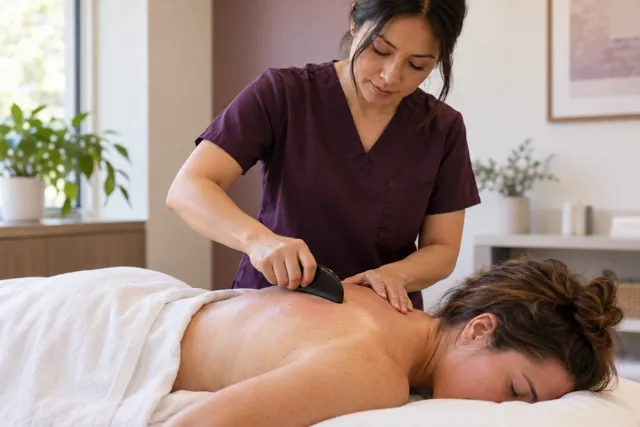
What might I notice?
Some people find it helpful for pain, but research is limited and benefits are uncertain.
 AMOM ClinicAcupuncture · Massage · Skin CareBook now
TRADITIONAL BODYWORK
Cupping uses suction cups on the skin. The clinic offers fire cupping and wet cupping as separate appointments. Ask your practitioner which method is appropriate and what aftercare is needed.
Choose the service, provider and available time in Mangomint.
KNOW BEFORE YOU GO
Cups create suction on the skin. Dry cupping does not pierce skin; wet cupping does and involves blood loss.
Some people find it helpful for pain, but research is limited and benefits are uncertain.
Discuss medications, bleeding problems, pregnancy and skin conditions. Ask which cupping method is planned and how equipment is cleaned.
Temporary round marks are common. Follow skin-care instructions; seek care for burns, extreme pain, fever or signs of infection.
Risks include skin discoloration, burns, scarring and infection. Repeated wet cupping can cause anemia; contaminated equipment can spread bloodborne infections.
Discuss recovery and response before another session. Repeated visits are not a guarantee of benefit.
General educational information. Your practitioner reviews your health history, the treatment and an individual follow-up plan. Updated October 10, 2026.
ASK US ANYTHING
Temporary marks can occur. Ask your practitioner about the expected appearance and aftercare.
They are different services. Ask the clinic to explain the method and requirements before choosing.
Discuss your health history, medications and skin concerns with your practitioner before treatment.
Suction affects small blood vessels near the skin surface. Marks usually fade, but lasting discoloration is possible.
Do not use mark color as proof of effectiveness; discuss how you actually feel.
No. Wet cupping breaks the skin and has additional bleeding and infection risks.
Tell your practitioner your preferences before starting and speak up if suction is painful.
MORE TO EXPLORE
Full-body Gua Sha sessions of 60 or 90 minutes.
An appointment to discuss your history and questions with a TCM practitioner.
Choose your provider and time, or ask us a question first.